Retaining Walls & Concrete Masonry
Strong, attractive retaining walls that solve drainage problems and create usable outdoor space on sloping lots.
Solving Slope and Drainage Problems With Retaining Walls
If your property slopes, you know the challenges this creates. Erosion washes away soil and damages landscaping. Water runs toward your foundation instead of away from it. You lose potential yard space because sloped areas are difficult to use. A properly designed retaining wall solves these problems while adding visual appeal to your property.
Retaining walls hold back soil and create level terraces on sloping ground. This prevents erosion, controls water flow, and creates usable outdoor space where you had unusable slope. The wall supports thousands of pounds of soil pressure, which is why proper engineering and construction are critical.
We see poorly built retaining walls failing all the time. They lean, crack, or collapse because someone did not account for drainage or soil pressure. Building a retaining wall is not just stacking blocks. It requires understanding soil mechanics, drainage principles, and structural requirements. Done wrong, a failing wall damages property and creates liability issues.
Here in Medford, MA, we build retaining walls that last for decades. We handle drainage properly from the start so water does not build up behind the wall. We use appropriate materials for the height and soil conditions. And we build to engineering standards that ensure your wall stays put through New England freeze-thaw cycles and heavy rain events.
Types of Retaining Walls We Build
Different situations call for different wall types. We install several styles based on your needs:
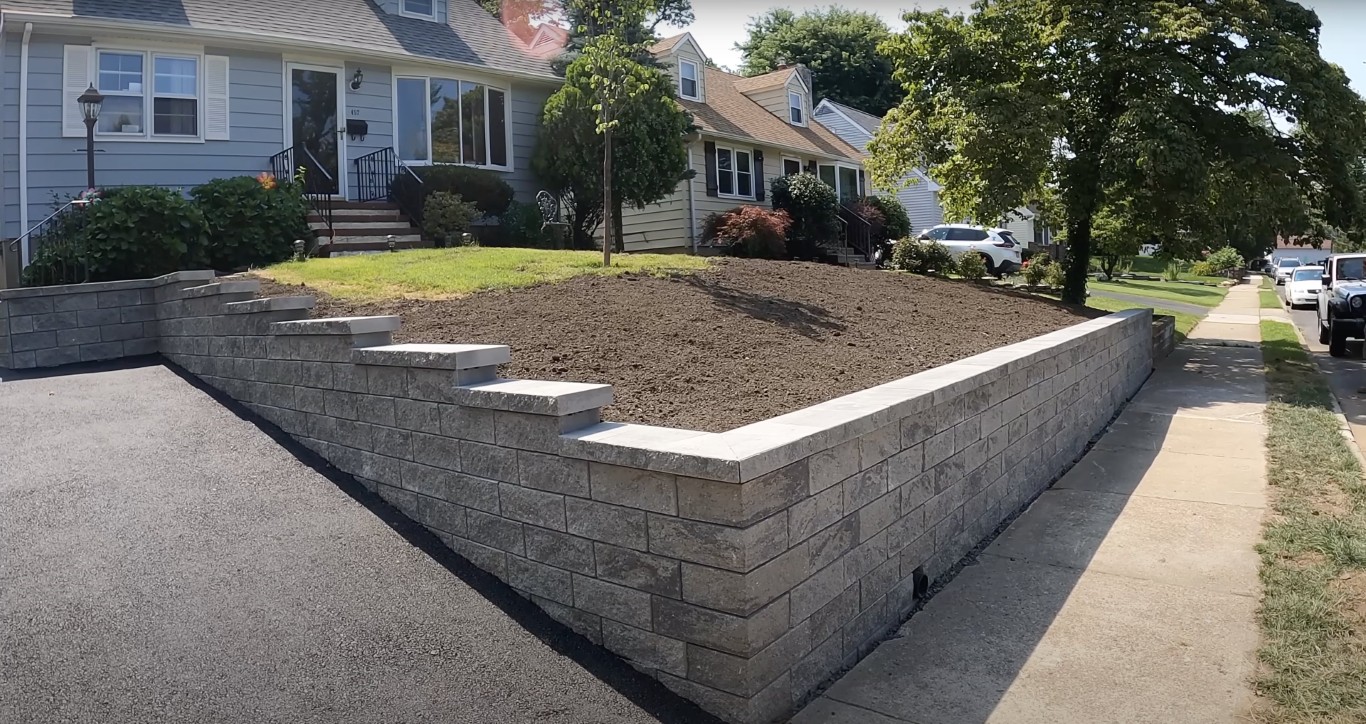
- Segmental block walls: Interlocking concrete blocks that create strong, attractive walls. Available in many colors and textures. Works well for walls up to 4 feet high.
- Poured concrete walls: Reinforced concrete walls formed and poured on site. Best for taller walls or situations requiring maximum strength and durability.
- Concrete masonry unit walls: Traditional concrete block construction with mortar joints. Very strong and cost-effective for utilitarian applications.
- Boulder walls: Large natural stones set in concrete. Creates a rustic, natural look that blends into landscaping.
- Terraced wall systems: Multiple shorter walls creating stepped terraces. Better for very steep slopes than one tall wall.
The right choice depends on wall height, soil conditions, aesthetic preferences, and budget. We assess your specific situation and recommend the best approach. Sometimes the most expensive option is not necessary. Other times, trying to save money leads to problems. We give you honest recommendations based on what will work best.
Why Proper Drainage Makes or Breaks Retaining Walls
The most common reason retaining walls fail is poor drainage. Water builds up behind the wall, adding enormous pressure that the wall was not designed to handle. Eventually, the wall fails by leaning, cracking, or collapsing.
Proper retaining wall drainage requires multiple components working together. We install gravel backfill behind the wall that allows water to flow down instead of building pressure. Perforated drain pipes at the base collect water and carry it away. Weep holes or drainage outlets release water at regular intervals. Filter fabric prevents soil from clogging the drainage system.
For taller walls or challenging soil conditions, we may recommend additional drainage measures like surface swales that divert water before it reaches the wall. The goal is managing water so it never becomes a problem.
Engineering matters too. Walls over a certain height require engineered designs and building permits. Even shorter walls benefit from proper design that accounts for soil type, slope angle, and surcharge loads. We handle these engineering requirements as part of our service.
How We Build Your Retaining Wall
Retaining wall construction follows a specific sequence that cannot be shortcut:
We start with careful site assessment and design. Where exactly should the wall go? How high does it need to be? What are the soil conditions? Where will water be directed? These questions shape the entire project.
Excavation and base preparation come next. We dig a trench below frost depth and install a compacted gravel base that provides a level, stable foundation. The base must be solid because everything else sits on it.
Wall construction proceeds from the bottom up. Whether we are stacking blocks, forming and pouring concrete, or setting boulders, precision matters. Each course must be level and properly set before moving to the next. We install drainage components as we build.
Backfilling happens in stages with proper compaction. We use engineered gravel backfill directly behind the wall, then transition to soil further back. Everything gets compacted thoroughly to prevent settlement.
Finally, we cap the wall, complete any landscaping connections, and verify that drainage works properly. A well-built retaining wall should require virtually no maintenance for decades.
Creating Usable Space and Adding Value
Beyond solving erosion and drainage problems, retaining walls create opportunities. That unusable slope becomes level terraces perfect for patios, gardens, or play areas. You gain functional outdoor space that did not exist before.
Property value increases too. A professionally built retaining wall that solves drainage issues and creates attractive terraces makes your property more appealing to future buyers. It shows you invested in proper solutions rather than letting problems persist.
We work with your overall landscape vision. Retaining walls can incorporate planters, lighting, or seating areas. They can define spaces and create visual interest. The functional aspects of holding back soil do not mean the wall has to be purely utilitarian.
When you hire DoneRight Medford Concrete for retaining wall work, you get a team that understands both the structural requirements and the aesthetic possibilities. We build walls that work properly and look great doing it.